

A smile can look uneven because of tooth proportions, shade, spacing, gum display or lip movement—not because one tooth needs cosmetic treatment in isolation. By the end, you will know how dentists assess these factors, compare shape and colour treatments, and test whether a proposed result will look natural and function safely.
Key takeaways
- Assess tooth proportions, gums, lips and bite before changing one tooth.
- Choose bonding, veneers, contouring or orthodontics based on the underlying problem.
- Match tooth colour using photographs, shade guides and the cause of discolouration.
- Preview proposed changes and confirm function before treatment begins.
How dentists assess the whole smile before changing one tooth
A smile design consultation assesses the entire smile before changing one tooth because a locally perfect result can look wrong beside neighbouring teeth or fail under the bite. The dentist compares tooth shape and size, width-to-length ratios, colour, spacing, alignment, gum display, lip position and facial proportions during rest, smiling and speaking.
The starting records should include:
- Controlled-light photographs at rest and in a natural smile, including frontal and side views, document tooth edges, gum display, lip position and facial balance.
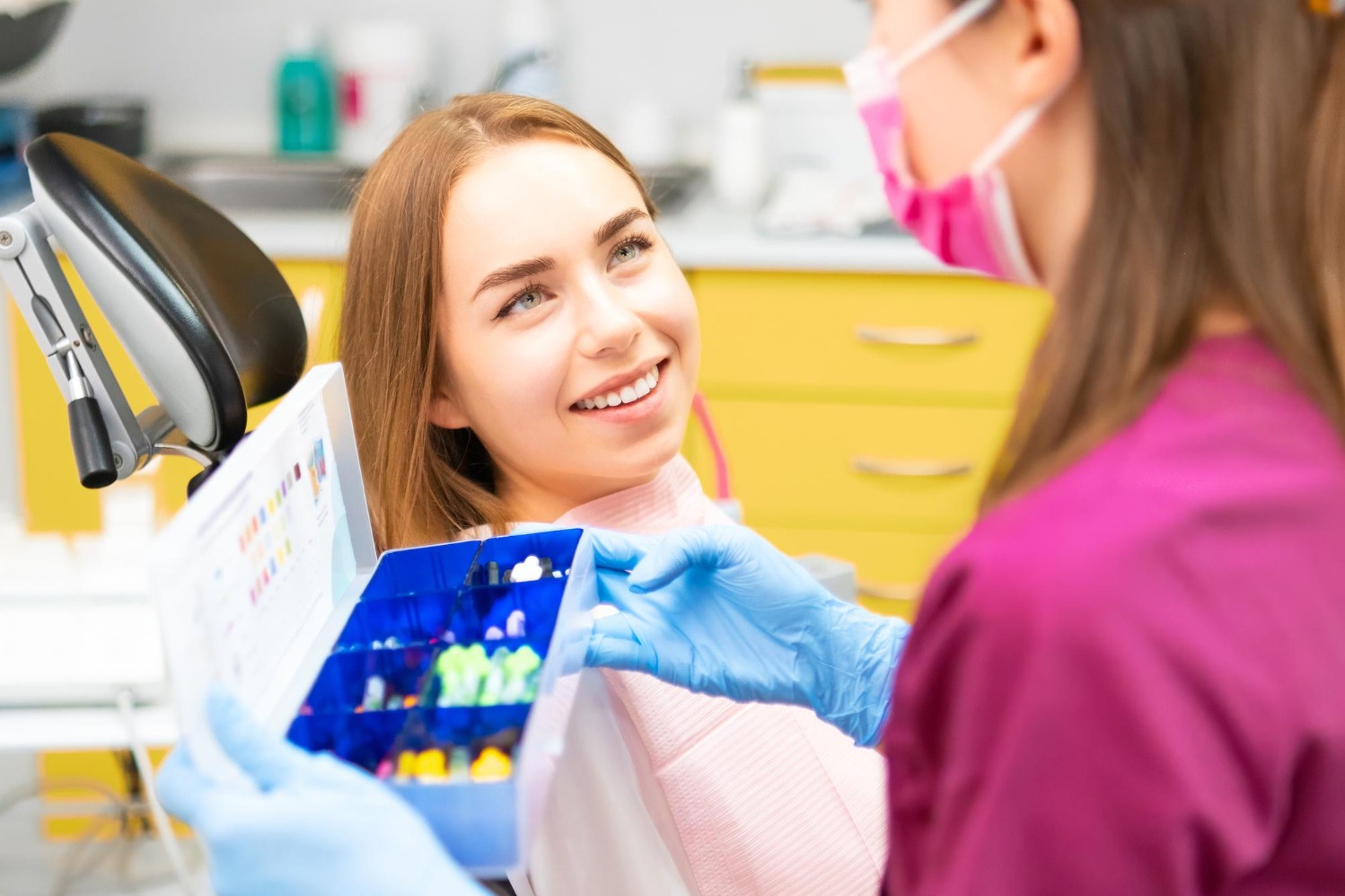
- A shade assessment before the teeth dry records brightness, translucency and surface colour under controlled lighting. Dehydrated enamel looks temporarily lighter and can lead to a mismatched restoration.
- A digital scan or impression captures tooth positions, contours and the bite. Keep records of existing fillings, veneers, crowns, bridges and implant restorations because their colour and shape affect the proposed result.
- Speech and function checks show whether tooth length or lip position affects sounds such as “f” and “v”. Bite analysis examines contact points, bite forces and movement of the lower jaw.
Before cosmetic treatment begins, the dentist screens for active decay, cracked teeth, gum disease and exposed roots. These problems can cause pain, sensitivity or restoration failure if they are covered rather than treated. Ask about clenching, grinding, nail biting and other bruxism-related habits; heavy forces can chip or debond otherwise attractive cosmetic work.
Which treatments can change tooth shape, spacing and visible proportions
A visible proportion can change by adding material, removing enamel, moving teeth or altering the gum line. The least destructive option is not automatically the best: the choice depends on decay, bite forces, available space and how much healthy structure remains.
| Option | Tooth structure involved | Main trade-off |
|---|---|---|
| Composite bonding | Additive treatment with little or no enamel removal; useful for small chips, gaps and local shape defects | Polishable and repairable, but stains and wears more readily than many ceramic restorations |
| Tooth-coloured fillings | Remove decay or old material, then restore the cavity with composite or another tooth-coloured material | Treats damage rather than changing a healthy tooth’s proportions; edges can stain or fracture |
| Enamel reshaping | Removes a small amount of enamel from a prominent edge or contact point | Limited to minor changes; excessive removal can cause sensitivity, weaken enamel or create an uneven result |
| Veneers | Conventional porcelain veneers usually require irreversible enamel removal from the front surface | More colour-stable than bonding, but can chip, debond or require replacement; minimal-preparation veneers are not suitable for every position or bite |
| Crowns and bridges | Crowns cover and reduce a damaged tooth; bridges use prepared supporting teeth to replace a missing one | More extensive tooth reduction, cost, maintenance and biological risk than bonding |
Gum recontouring or crown lengthening can expose more tooth and change apparent length, but involve healing, sensitivity and periodontal or aesthetic risks.
If crowding or spacing causes the proportion problem, orthodontic treatment may need to move teeth or create space before reshaping, bonding, veneers or crowns. Otherwise, cosmetic material can make teeth look bulky or disturb the bite.
How dentists diagnose tooth colour and prevent shade mismatches
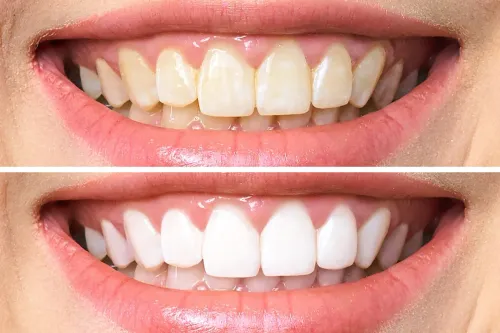
External stains sit on the tooth surface and commonly come from tea, coffee, tobacco or plaque. Intrinsic discolouration lies within tooth structure and can follow trauma, fluorosis, ageing or medication; cleaning will not remove it.
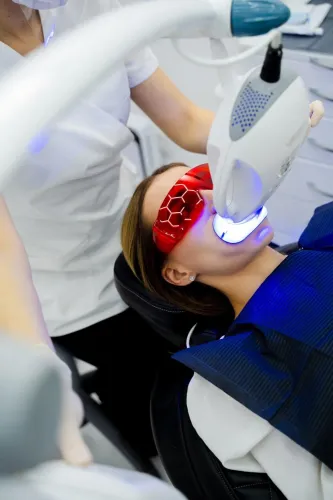
Dentists first check decay, cracks and exposed roots before recommending whitening. Professional whitening can lighten natural enamel, but it cannot change the colour of fillings, crowns, bridges, veneers or implant crowns. Internal whitening may be considered for a discoloured non-vital tooth after its root-canal treatment and surrounding tissues have been assessed.
For natural teeth and a new visible restoration, the usual sequence is:
- Diagnose disease, cracks, gum problems and the source of discolouration.
- Complete professional whitening, if it suits the natural tooth shade.
- Wait for the shade to stabilise, then select and place the new restoration.
An existing crown or veneer can become mismatched after the surrounding teeth are whitened because its material does not bleach. Shade selection also involves translucency, surface texture, neighbouring teeth, gum colour and the lighting in which the smile will be seen.
Teeth dry during treatment and appear temporarily lighter, so assess the natural tooth shade under controlled lighting before prolonged dehydration.
Whitening can cause temporary sensitivity or gum irritation, especially with stronger or longer applications. Unexplained sensitivity needs examination for decay, a crack or exposed roots rather than automatic whitening.
How a smile preview tests appearance before treatment begins
A smile preview lets you test tooth length, edge position, proportions, spacing and gum display before you commit to drilling, bonding or laboratory work. A digital smile simulation uses photographs and measurements to show a proposed arrangement, while a wax-up or dental mock-up places the proposed contours on a model or temporarily over your teeth.
| Method | What you can compare | What it cannot confirm |
|---|---|---|
| Digital smile preview | Tooth width, length, edge line, spacing and gum display | Lip movement, speech and bite loading |
| Photograph | Facial symmetry, tooth display and smile arc | Three-dimensional thickness and translucency |
| Wax-up | Proposed proportions and contour changes | Final ceramic shade, gum healing and exact fit |
| Chairside mock-up | How the design looks with your lips, face and natural smile | Long-term wear, speech adaptation and restoration strength |
The clinician checks the design against facial symmetry, age, personality, lip movement and your natural smile. There is no universal golden ratio, and choosing the brightest possible teeth can make the result look artificial beside your skin, lips and surrounding teeth.
Treat the preview as a planning and communication aid, not a guarantee. It cannot fully reproduce tooth translucency, ceramic thickness, gum healing or the way your bite loads restorations.
At DENTessa Dental Clinic Pimple Saudagar,PCMC, the consultation can connect the proposed design to clinical findings, existing restorations, gum condition and the treatment sequence, so an attractive image does not replace disease and function checks.
Related services
Tooth Coloured Fillings Clinic in Pimple Saudagar Tooth Coloured Fillings Clinic in Pimple Saudagar,PCMC DENTessa Dental Clinic is the Best Tooth Coloured Fillings Clinic in Pimple Saudagar, Rahatani, Pimple Nilakh, Kalewadi and Pimpri Chinchwad. View service → |
Tooth Whitening Clinic in Pimple Saudagar Tooth Whitening Clinic in Pimple Saudagar, Pimple Gurav, PCMC DENTessa Dental Clinic is the Best Tooth Whitening Clinic in Pimple Saudagar, Rahatani, Pimple Nilakh, Kalewadi and Pimpri Chinchwad. View service → |
How to choose a safe treatment sequence and protect the result
Untreated decay, cracks or gum disease can undermine cosmetic work, so treatment sequencing must begin with diagnosis and disease control.
- Treat decay, cracks or gum disease before changing appearance.
- Use orthodontics when tooth position, crowding or spacing is the main problem; moving teeth can create the space needed for later restoration.
- Whiten natural teeth before selecting the shade of a new visible restoration. Whitening does not change fillings, veneers, crowns, bridges or implant crowns.
- Choose the final treatment according to remaining structure, available space and function.
| Option | Best fit | Main caution |
|---|---|---|
| Composite bonding | Small chips, gaps or shape defects | Needs polishing or repair and stains or wears sooner |
| Veneer | Front-surface colour or shape changes with suitable enamel and space | Conventional veneers require irreversible enamel removal and can chip or debond |
| Crown | A weakened or heavily restored tooth | More tooth reduction and eventual replacement risk |
| Bridge | A missing tooth with suitable supporting teeth | Loads the supporting teeth and requires careful bite planning |
| Gum treatment | Excess gum display or uneven gum levels | Healing, sensitivity and periodontal or aesthetic risks |
A bite assessment must check bite forces, heavy excursive contacts and an unfavourable bite. Clenching, bruxism and cosmetic dentistry are a risky combination; nail biting and pen chewing can also chip or debond restorations. A night guard or habit change may protect the result.
Composite is repairable; ceramic restorations can chip or require replacement. Straightened teeth can move, so retainers after orthodontic treatment are essential. Gum recontouring and crown lengthening are surgical procedures, not merely photographic adjustments.
Frequently asked questions
How do dentists assess the whole smile before changing one tooth?
They compare tooth shape, size, width-to-length ratios, colour, spacing, alignment, gum display, lip position and facial proportions while you rest, smile and speak.
Which treatments can change tooth shape, spacing and visible proportions?
Tooth contouring, composite bonding, veneers and orthodontic treatment address different concerns. The suitable option depends on enamel, bite, alignment, tooth position and the amount of change required.
How do dentists diagnose tooth colour and prevent shade mismatches?
They assess whether colour comes from surface stains, enamel, dentine, restorations or internal discolouration, then compare shades using controlled lighting, photographs and neighbouring teeth.
How does a smile preview test appearance before treatment begins?
A preview uses photographs, digital planning or a temporary mock-up to assess proposed tooth length, shape, spacing and smile display before permanent changes.
How do you choose a safe treatment sequence and protect the result?
Treat active decay, gum disease and bite problems first, then sequence alignment, whitening, restorations or cosmetic changes. Maintain results with hygiene visits, daily cleaning and protection from grinding.
Related services
Aligners Treatment Clinic in Pimple Saudagar Aligners Treatment Clinic in Pimple Saudagar,PCMC DENTessa Dental Clinic is the Best Aligners Treatment Clinic in Pimple Saudagar, Rahatani, Pimple Nilakh, Kalewadi and Pimpri Chinchwad. View service → |
Crown And Bridge Treatment Clinic in Pimple Saudagar Crown And Bridge Treatment Clinic in Pimple Saudagar,PCMC DENTessa Dental Clinic is the Best Crown And Bridge Treatment Clinic in Pimple Saudagar, Rahatani, Pimple Nilakh, Kalewadi and Pimpri Chinchwad. View service → |