

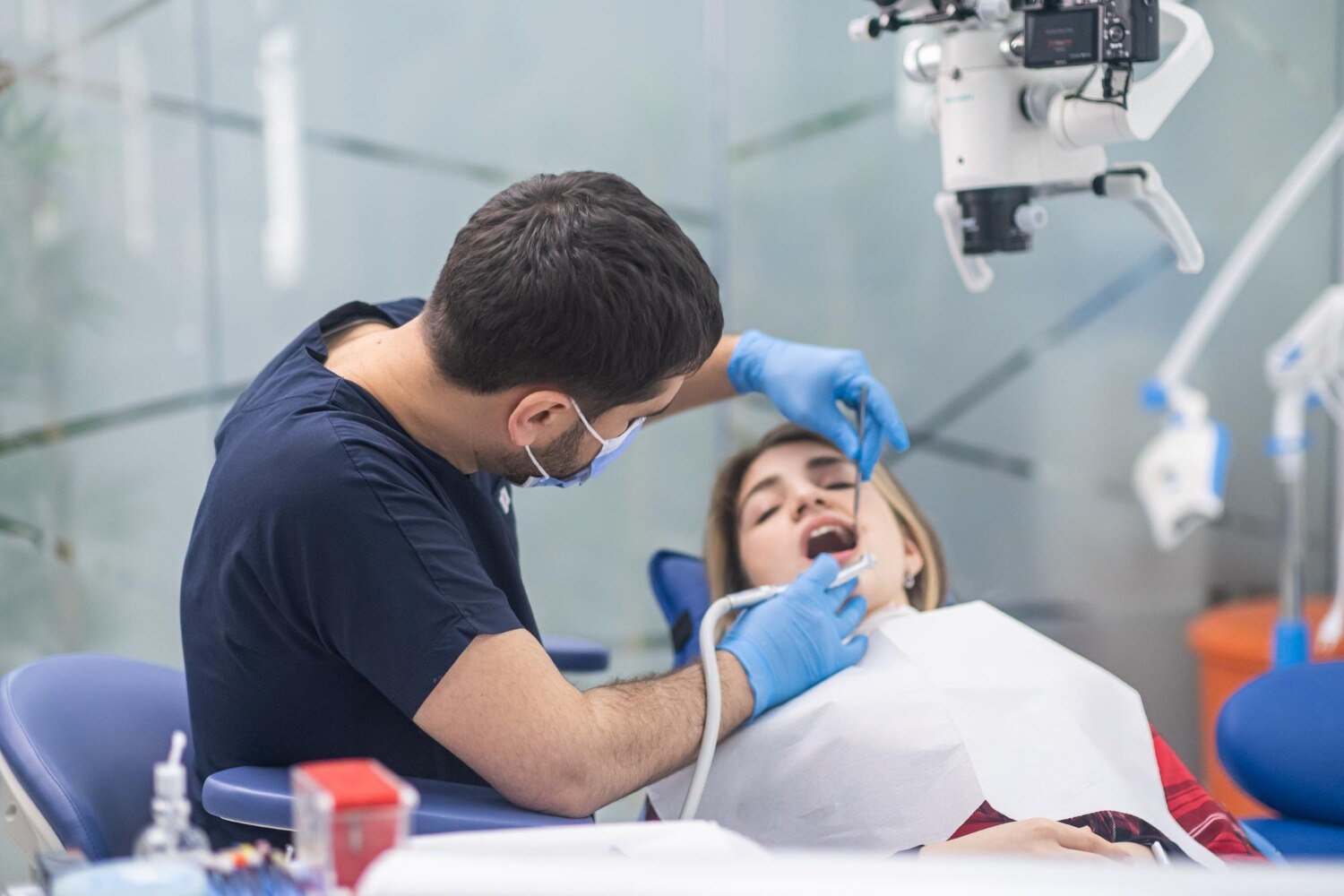
The right clinic depends on the problem you need solved, the clinician’s training, the diagnostic tools available and the quality of follow-up—not simply the nearest map result. By checking those factors in a practical order, you can choose appropriate care for preventive visits, urgent pain, damaged teeth, missing teeth, orthodontics or a child’s needs.
Key takeaways
- Treat facial swelling, fever, or swallowing trouble as urgent.
- Confirm the clinic offers your exact treatment and needed diagnostic tests.
- Ask about sterilisation, dentist credentials, alternatives and the full cost.
- Choose a clinic you can reach for reviews and follow-up visits.
Start with your dental need and its urgency
Match the appointment to the problem, then screen for urgency. Severe tooth pain with facial swelling, fever, difficulty swallowing, difficulty breathing, or inability to open your mouth normally needs urgent assessment; difficulty breathing or swallowing is an emergency, not a routine cleaning visit.
- Choose preventive dental care for a check-up, gum assessment, cleaning, fluoride advice, or caries prevention. Ask whether the examination includes periodontal pocket measurements; pockets of 4 mm or more can indicate gum disease requiring more than a routine cleaning.
- Choose an urgent dental appointment for tooth pain, a broken tooth, uncontrolled bleeding, or a loose restoration. A visible cavity does not determine treatment: decay reaching the pulp may require root-canal treatment or extraction, while a healthy pulp may permit a filling or other restoration.
- Choose a restorative consultation for a damaged or decayed tooth, and a prosthodontic or implant consultation for missing teeth treatment. Confirm whether the first visit includes an examination and treatment plan rather than assuming treatment starts immediately.
- Book orthodontic assessment for alignment or bite concerns. For appointments for children, ask for a child-specific risk assessment covering diet, fluoride exposure, sealants, and recall timing rather than an identical plan for every child.
Tell the clinic your symptoms, how long they have lasted, and any swelling or injury. Ask whether you need an emergency slot, a routine examination, or a longer consultation.
Verify the exact service, dentist and diagnostic capability
Ask for the treating dentist’s name, exact qualification, dentist registration number and experience with your procedure before booking. A broad service menu does not prove that every dentist performs implants, root canals, aligners, pediatric care or oral surgery.
Use this checklist:
- For orthodontics, ask whether the examination covers teeth, facial growth, bite, gum condition and indicated radiographs. Clear aligners do not control every movement; ask when fixed appliances or an orthodontist referral would be more predictable.
- For gum bleeding, loose teeth or bad breath, request a periodontal assessment with pocket-depth measurements, not just a cleaning. Pockets measuring 4 mm or more can require periodontal treatment.
- For implants or complex extractions, confirm access to intraoral X-rays, dental radiographs and implant-planning images. Ask why a cone-beam CT scan is needed and how its three-dimensional information will change treatment.
- For a decayed tooth, ask whether the pulp is healthy, inflamed or irreversibly damaged. The answer separates a filling or tooth-preserving restoration from root-canal treatment or extraction.
- For laser dentistry, ask for the diagnosis, exact laser procedure, expected benefit and conventional alternative. Laser treatment is a technique, not a universal replacement for drills, scalpels or periodontal care.
- Check the dentist’s registration on the official dental regulator’s register, then verify dental specialist qualifications. A general dentist can provide many advanced procedures without having completed an accredited specialty residency.
The clinic should identify who examines you, who performs treatment and when another specialist takes over. That chain of responsibility is stronger evidence than a “specialist” label alone.
Check safety standards and ask the right questions on your first call
Ask these questions before booking, and request clear answers rather than a general assurance that the clinic is “safe” or “fully equipped.”
1. “How do you manage dental infection control?” Ask whether reusable critical and semicritical instruments undergo heat sterilization, whether sterilizers are monitored routinely, and how sterilization records are checked. Confirm that staff use hand hygiene and appropriate barriers, and that indicated items such as needles and certain suction components are single-use.
Ask whether instruments arrive in sealed packs and are opened for your treatment.
2. “What will my first examination include?” Ask whether the dentist will perform a clinical examination, periodontal assessment and intraoral imaging when needed. Ask why dental X-rays are recommended, and whether a cone-beam CT scan is necessary.
Cone-beam CT provides three-dimensional information but usually exposes you to more radiation than ordinary intraoral X-rays, so the dentist should explain how the result will change diagnosis or treatment.
3. “Who will treat me, how long is the appointment, and what happens if I need sedation dentistry?” Confirm the dentist’s name, registration, relevant experience, sedation method, monitoring, fasting instructions, escort requirements and recovery plan. Ask what follow-up is included and how urgent problems are handled.
Severe pain with facial swelling, fever, difficulty swallowing, difficulty breathing or inability to open your mouth normally needs urgent assessment. Difficulty breathing or swallowing is an emergency; do not wait for a routine appointment.
Compare the proposed treatment, alternatives and total cost
Accept a treatment plan only when it names the diagnosis, explains why that option fits, and records alternatives, risks, expected longevity, maintenance, and the failure plan. A large-looking cavity does not automatically justify a root canal: ask whether the pulp is irreversibly damaged and whether a filling or tooth-preserving restoration is viable.
Separate necessary disease treatment from elective cosmetic work.
| Option | What the clinic should explain | Warning sign |
|---|---|---|
| filling versus root canal | Pulp condition, tooth structure, expected durability, and extraction as an alternative | A root canal is presented as a standard upgrade |
| laser dentistry | The specific procedure, expected benefit, laser type, and equivalent conventional treatment | “Laser” is used without a diagnosis or measurable advantage |
| clear aligners versus fixed braces | Bite, tooth movement, periodontal health, radiographs when indicated, treatment time, and orthodontist involvement | Aligners are promised for every bite problem |
| implant treatment | Bone condition, surgical and restorative stages, and alternatives such as a bridge or denture | The plan skips who provides each stage |
Ask for an itemised dental implant treatment cost. Confirm that it includes imaging, the implant fixture, grafting, temporary teeth, the implant abutment crown, final restoration, maintenance, and management of complications. Ask why a 3-D cone-beam CT is needed; it exposes you to more radiation than ordinary dental X-rays and should change diagnosis or treatment.
Seek a second opinion before irreversible cosmetic or restorative work, especially when substantial tooth structure will be removed.
Choose the clinic you can reach and continue using
For treatment requiring multiple visits, choose the clinic you can reach consistently, not simply the one with the shortest first trip. Root canals, implants, orthodontics and gum treatment may involve planning, procedures and follow-up dental appointments; missed visits can delay healing or extend treatment.
| Option | What it means | When it applies |
|---|---|---|
| Nearby clinic | Shorter travel, easier urgent review and lower time cost per visit | Choose it when the dentist provides the required treatment and you can attend reliably |
| Farther clinic | Longer journeys for a specific dentist, specialist or diagnostic service | Choose it when the clinical advantage is clear and outweighs repeated travel |
| Clinic with poor access | Difficult transport, limited hours or no practical parking | Avoid it if each visit creates a realistic risk of lateness or cancellation |
Before deciding, test the journey at your likely appointment time and ask about appointment availability, rescheduling, records, after-hours advice and clinic accessibility parking. Confirm who will handle complications and whether the same dentist will review your progress; continuity of dental care matters when treatment changes between visits.
For a patient comparing options in the area, DENTessa Dental Clinic Pimple Saudagar,PCMC can be included in the comparison when its location, appointment schedule and exact treatment capability fit the plan. A distant clinic is worth choosing only when it offers a specialist or service you cannot reasonably obtain nearby.
Related service
Dental Clinic in Pimple Saudagar Dental Clinic in Pimple Saudagar, Pimple Gurav, PCMC DENTessa Dental Clinic is the Best Dental Clinic in Pimple Saudagar, Rahatani, Pimple Nilakh, Kalewadi and Pimpri Chinchwad. View service → |
Frequently asked questions
How do I know whether I need an urgent dental appointment?
Seek urgent assessment for severe tooth pain with facial swelling, fever, difficulty swallowing, difficulty breathing, or inability to open your mouth normally. Difficulty breathing or swallowing is an emergency.
What should I verify before booking a dental clinic?
Confirm that the clinic provides your exact treatment, identify the dentist who will perform it, and ask whether it has the diagnostic equipment your case requires.
What safety questions should I ask on my first call?
Ask how instruments are sterilised, how disposable items are handled, who will treat you, and what you should bring to the appointment.
How should I compare dental treatment costs?
Request the proposed treatment, alternatives, number of visits, diagnostic charges, follow-up costs and total estimated price in writing.
Why does location matter when choosing a dental clinic?
A reachable clinic makes urgent visits, repeated appointments and post-treatment reviews easier to complete.