

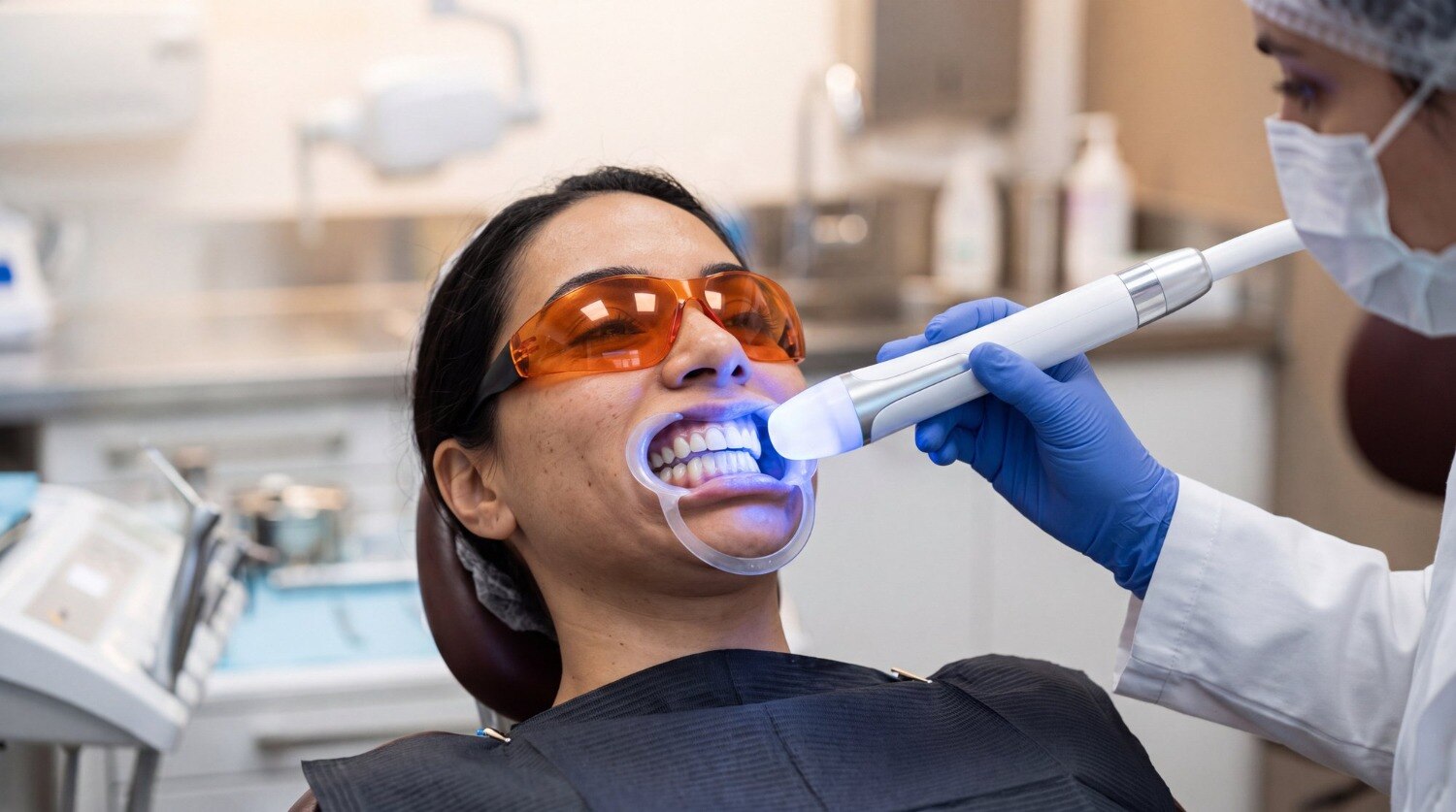
Coffee, tea, tobacco, age, uneven staining and a smile that stays dull after brushing can all prompt questions about professional whitening. By the end, you will know when a consultation is worthwhile, when another dental treatment must come first, and how to compare clinic whitening with home and over-the-counter options.
Key takeaways
- Book a consultation when persistent yellowing affects your confidence.
- Whitening works best on natural teeth with surface or age-related staining.
- Treat decay, gum disease, pain, or damaged enamel before whitening.
- Ask how restorations, sensitivity, timing, and maintenance affect your plan.
Signs That a Whitening Consultation Is Worthwhile
Brushing removes plaque and some surface deposits, but it cannot erase colour that remains after a thorough cleaning. Arrange a teeth whitening consultation when yellowing persists for several weeks, returns quickly, or makes you avoid smiling in photographs.
A consultation is worthwhile for these common situations:
- You have yellow teeth from coffee and tea despite regular brushing and flossing.
- You have tobacco stains on teeth that toothpaste no longer improves.
- Your teeth look darker with age, or the colour is uneven across your smile.
- You are planning teeth whitening before wedding or interview photographs and want a realistic result and safe timing.
- One tooth has suddenly turned grey, brown, or much darker than its neighbours.
- Discolouration appeared after a knock, dental procedure, or other unexplained change.
A dentist can distinguish ordinary surface staining from colour changes within the tooth and check whether fillings, crowns, veneers, or other dental work will remain a different shade. That assessment matters because whitening natural enamel does not whiten restorations.
Do not keep repeating whitening products simply because the first course produced little change. Excessive or prolonged use can cause sensitivity and irritate your gums without creating unlimited brightness. Book an examination when brushing has stopped making a difference, especially if the colour change is new, localised, or accompanied by discomfort.
What Kind of Discolouration Can Whitening Improve?
Coffee, tea, tobacco and some foods usually create extrinsic tooth stains on the enamel surface. They often look like a yellow or brown film and lighten predictably with peroxide whitening.
Intrinsic tooth discoloration lies within the enamel or dentin, so you cannot confirm its depth by brushing alone; a dentist uses examination, your history and sometimes dental imaging.
| Type | Clue | Likely whitening result |
|---|---|---|
| Extrinsic tooth stains | Even yellow or brown staining near the gumline or across several teeth | Usually the most noticeable and predictable improvement |
| Intrinsic tooth discoloration | Colour appears deeper, uneven, grey or brown, with no removable surface deposit | Partial improvement is more likely than complete removal |
| Tetracycline staining | Bands or widespread grey-brown colour developed during tooth formation | Whitening is slow, limited and difficult to make uniform |
| Fluorosis | White, cream or brown patches formed while enamel developed | Fluorosis whitening results vary; whitening can make patch contrast more noticeable |
| Trauma-related darkening | One tooth turns grey or brown after an injury | Whitening alone may not address the internal cause |
A single dark tooth deserves examination before cosmetic treatment, especially when the change is new, follows trauma or comes with pain. If internal colour barely changes, ask about bonding, veneers or restorative treatment; these options cover the shade instead of trying to bleach through altered enamel or dentin.
When Whitening Should Not Be Your First Dental Treatment
Active cavities, leaking fillings, cracked teeth, and gum inflammation require treatment before cosmetic whitening. With cavities and whitening, peroxide can reach softened inner tooth tissue and trigger sharp pain. A teeth whitening examination can identify decay, exposed roots, failing restorations, and gum disease before treatment irritates them.
Delay whitening and arrange an examination if you have:
- A new dark spot, pain, or colour change limited to one tooth
- Bleeding, swollen, tender, or receding gums
- A chipped or fractured tooth, especially after an injury
- Severe sensitivity to cold, heat, sweets, or air
- A loose filling, crown, veneer, bridge, or bonding repair
| Problem | Why whitening should wait | What comes first |
|---|---|---|
| Cracked teeth and sensitivity | Peroxide can enter cracks or exposed dentin and intensify pain | Examination, repair, and a sensitivity plan |
| Gum inflammation before whitening | Irritated tissue can burn or become more painful | Cleaning and gum treatment |
| One dark tooth after trauma | The pulp may be damaged; whitening will not treat the cause | Pulp and root assessment |
People under 18 need an age and dental-development assessment. Whitening is not recommended during pregnancy or breastfeeding in UK guidance, so discuss timing with a dentist.
Plan the examination before whitening if you want an even shade after braces or before crowns, veneers, bonding, or implants. Existing white spots can become more visible, and restorations will not lighten like natural enamel.
How Professional Whitening Compares with Home and Salon Options
The main gain from a dental clinic is controlled treatment: faster visible change, an examination before whitening, and help managing sensitivity or gum irritation. Professional teeth whitening versus strips is not simply a choice between strong and weak products; fit, diagnosis, whitening gel concentration, contact time and follow-up affect the result.
| Option | What you gain | Main limitation |
|---|---|---|
| Whitening toothpaste | Removes some surface stain during brushing | Cannot substantially change the natural internal shade |
| Strips or unsupervised gels | Low-cost, convenient treatment at home | Uneven coverage, gum contact and limited control over sensitivity |
| Dentist-supervised whitening trays | A custom fit, measured gel and an adjustable schedule | Results take days or weeks rather than one appointment |
| Charcoal products | A brushing alternative for surface deposits | Abrasive use can wear enamel; it does not reliably whiten deeper discolouration |
| Salon whitening | A quick cosmetic setting | A non-dental salon may not assess cavities, gum inflammation, restorations or cracks |
| In-office whitening | Higher whitening gel concentration under gum protection and controlled timing | It costs more and does not make crowns, veneers or fillings change colour |
A professionally made tray is not automatically safe. Excess gel or a poor fit can burn the gums, and swallowing or overusing gel increases avoidable exposure. A dentist can shorten contact time, change the concentration or pause treatment when sensitivity develops.
Ask what laser teeth whitening safety measures are used; a laser does not remove the need for eye protection, gum protection and correct peroxide handling. At DENTessa Dental Clinic Pimple Saudagar,PCMC, ask for an assessment of restorations and gum position before choosing the method.
Related service
Tooth Whitening Clinic in Pimple Saudagar Tooth Whitening Clinic in Pimple Saudagar, Pimple Gurav, PCMC DENTessa Dental Clinic is the Best Tooth Whitening Clinic in Pimple Saudagar, Rahatani, Pimple Nilakh, Kalewadi and Pimpri Chinchwad. View service → |
What to Expect for Timing, Restorations and Maintenance
A teeth whitening appointment time is commonly about 60 to 90 minutes. The dentist checks your teeth and gums, records a starting shade, protects the gums, applies peroxide gel, and follows the planned application intervals. You may notice temporary sensitivity afterward, especially to cold drinks.
Plan restoration work around the whitening result. Crowns and veneers do not whiten, and neither do tooth-coloured fillings, bridges or implants. If a visible crown or veneer needs replacement, whitening before dental crowns lets the dentist select a closer shade; replacing it first can leave a colour mismatch after whitening.
- Delay treatment during pregnancy or breastfeeding, and ask about alternatives with your dentist.
- Ask about age and dental development before treatment; routine cosmetic whitening is generally unsuitable for people under 18.
- Schedule whitening before new crowns, veneers, bonding or implants when matching the whole smile matters.
- Allow time for the shade to settle before choosing replacement restorations.
- Follow the dentist’s plan for teeth whitening maintenance and sensitivity rather than repeating unsupervised courses.
- Reduce coffee, tea, tobacco and strongly coloured foods after treatment, since new stains accumulate.
- Arrange future touch-ups only when the colour has faded and your teeth and gums remain healthy.
Whitening is not permanent. Excessive or prolonged use can irritate oral tissues and increase sensitivity without making natural teeth indefinitely lighter.
Frequently asked questions
When is a teeth whitening consultation worthwhile?
Arrange one when yellowing persists for several weeks, returns quickly after cleaning, or makes you avoid smiling in photographs.
What types of discolouration can teeth whitening improve?
Professional whitening can improve many stains on natural teeth, including surface deposits and age-related yellowing. A dentist must assess the cause first.
When should whitening not be your first dental treatment?
Treat decay, gum disease, tooth pain, cracked teeth, exposed roots, or enamel damage before whitening. Existing restorations may also need separate planning.
How does professional whitening compare with home and salon options?
A dental clinic can assess your teeth and gums, select an appropriate whitening method, and plan for sensitivity. Home and salon options differ in supervision, suitability, and consistency.
How long does whitening take, and what happens to restorations?
Timing depends on the method and your dental condition. Whitening changes natural tooth colour, not crowns, veneers, fillings, or other restorations, so ask how shade differences will be managed.