

Teeth that overlap, twist, leave gaps or meet unevenly can signal more than a cosmetic concern. By recognising the pattern, checking for problems that need treatment first and understanding what an assessment involves, you can decide when to seek orthodontic care and whether aligners are a suitable option.
Key takeaways
- Overlapping, twisted, or protruding teeth can indicate crowding.
- Book an orthodontic assessment when teeth affect cleaning, chewing, or your bite.
- Your first consultation includes an examination, scans, photographs, and treatment discussion.
- Aligners work best when you wear them consistently and follow cleaning instructions.
How to Recognise Crowding and Bite Problems
Crowded teeth overlap, twist, or sit outside the normal arch because there is not enough room. Misaligned teeth can also appear as uneven edges, gaps, teeth that meet before others, or a lower jaw that sits ahead of the upper jaw. Appearance alone cannot show whether the cause is dental, skeletal, or an unerupted tooth.
| Condition | What you may notice | What aligners might address |
|---|---|---|
| Crowding | Teeth overlap or a tooth sits inward or outward | Selected mild-to-moderate cases; attachments or space creation may be needed |
| Spacing | Gaps between teeth | Many mild-to-moderate gaps, after checking gum support |
| Rotated teeth | A tooth turns around its long axis | Small rotations are more predictable; significant rotations may need braces or attachments |
| Overbite | Upper front teeth cover too much of the lower teeth | Selected cases, sometimes with elastics or attachments |
| Underbite | Lower front teeth sit ahead of upper teeth | Mild dental cases; jaw-related underbite needs specialist assessment |
| Crossbite | One or more upper teeth bite inside the lower teeth | Some dental crossbites; complex or skeletal cases may need fixed appliances or surgery |
Arrange an examination before tooth movement if you have tooth pain, active decay, gum bleeding, loose teeth, jaw pain, or a suspected impacted tooth. A clinician may check your history, gums, bite, photographs, digital scan or impressions, and X-rays when indicated.
Aligners do not simply push every tooth outward. Crowding may require interproximal reduction, controlled expansion, posterior movement, extraction, or fixed braces, depending on root position, bone support, facial pattern, and bite.
When Misaligned Teeth Need an Orthodontic Assessment
Arrange an orthodontic assessment when crowding is joined by symptoms or signs that could make tooth movement unsafe. Do not wait for a cosmetic concern to worsen if you have tooth pain, active decay, gum bleeding, loose teeth, jaw pain, or a tooth that has not erupted as expected.
Book a dental examination before choosing aligners if you notice:
- Pain when biting, sensitivity that persists, or swelling around a tooth
- Gum bleeding during brushing, swollen gums, bad breath, or teeth that feel loose
- A suspected impacted or unerupted canine, especially if one side looks different from the other
- Broken edges, large fillings, gum recession, missing teeth, or previous periodontal treatment
- A bite that causes jaw fatigue, clicking with pain, difficulty chewing, or repeated cheek biting
These findings need treatment or investigation before orthodontic tooth movement. Moving teeth through inflamed periodontal tissues can worsen attachment and bone loss, while aligners can make plaque control harder.
An orthodontic assessment is more than a scan or impression. The clinician may review your medical and dental history, examine your gums and bite, take photographs, create digital models, and request dental X-rays when roots, bone, unerupted teeth, or jaw position need checking.
This distinguishes a tooth-position problem from a skeletal issue or an impacted tooth.
A mail-order plan cannot reliably identify decay, periodontal disease, root limitations, bone loss, or bite problems. Adults also need careful review when restorations, missing teeth, or earlier dental work affect the treatment plan.
What Happens at the First Aligner Consultation
A scan alone cannot establish whether aligners are safe. Before tooth movement, a clinician needs to find decay, active gum disease, infection, loose teeth, bone loss, root limitations, impacted teeth and bite problems. A scan or dental impression cannot show all of these conditions.
The first consultation usually includes:
- A medical and dental history, including previous orthodontic treatment, restorations, missing teeth, medications and gum problems.
- A clinical examination of teeth, fillings, gums, supporting bone and signs of infection.
- A bite assessment to check overbite, underbite, crossbite, jaw movement and whether the teeth meet evenly.
- Photographs plus digital scans or dental impressions to record tooth positions and create study models.
- Dental X-rays when the examination suggests unerupted teeth, root problems, bone loss, jaw imbalance or an impacted canine.
Treat active decay, gum disease or significant infection before aligners. Moving teeth through inflamed periodontal tissues can worsen attachment loss, while trays can make plaque control harder. Adults also need assessment for previous dental work, periodontal bone loss and missing teeth because these change movement limits and risk.
At DENTessa Dental Clinic Pimple Saudagar,PCMC, ask which findings the proposed plan covers and whether X-rays are needed before accepting a digital simulation. Significant rotations, extrusion, root movement, complex bite correction or an impacted tooth can require attachments, elastics, refinements, fixed braces or surgical orthodontic care instead of a short aligner plan.
Mild, Moderate and Severe Crowding: Which Treatment Fits
Aligners can manage mild crowding and selected moderate crowding when teeth have enough supporting bone and the bite does not need major correction. Predictability decreases with severe rotations, extrusion, root movement, or a substantial jaw discrepancy.
| Crowding level | Likely treatment approach | When another option may fit |
|---|---|---|
| mild crowding | Aligners alone, with planned tray changes | Attachments or limited IPR if teeth need extra control or space |
| moderate crowding | Aligners with attachments, IPR, elastics, or refinement trays | Braces if movements do not track reliably |
| severe crowding | A detailed orthodontic plan before choosing aligners | Braces, extraction, or combined treatment when space is substantially limited |
Attachments are small tooth-coloured composite shapes bonded to selected teeth. They help the tray grip and deliver forces for rotations, root control, or difficult movements.
Interproximal reduction (IPR) removes a controlled, limited amount of enamel between selected teeth to create space. It is not extraction; the clinician must assess enamel thickness, contact shape, tooth position, and gum health before planning it.
Do not solve a jaw-size problem by simply pushing teeth outward. Space may come from expansion within biological limits, moving back teeth, IPR, or extraction. Extraction becomes more relevant when crowding is severe, facial balance or periodontal support limits expansion, or roots cannot be positioned safely.
Fixed braces may provide better control for complex movements. Jaw surgery is reserved for a significant skeletal mismatch that orthodontic tooth movement cannot correct. Any decay or active gum disease needs treatment before either aligners or braces, and aligners require roughly 20–22 hours of daily wear.
The Daily Responsibilities of Aligner Treatment
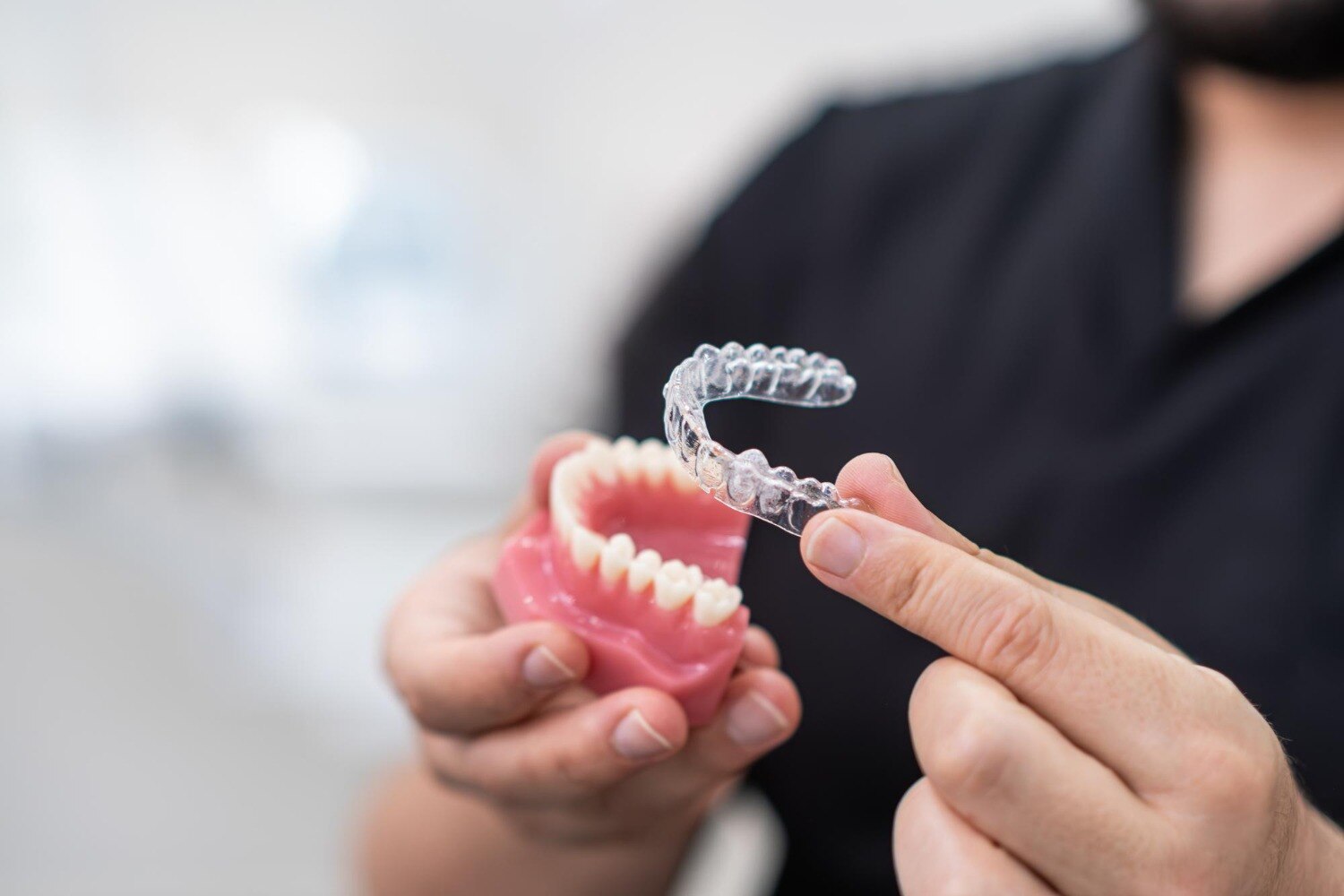
Most aligner plans prescribe 20–22 hours of aligner wear time each day. Remove trays only for meals, anything besides cool water, brushing and flossing; frequent removal can cause poor tracking, longer treatment and extra refinement stages.
Build your daily routine around these tasks:
- Rinse the trays before reinserting them, and clean them with a soft toothbrush and lukewarm water. Hot water can distort the plastic.
- Brush with fluoride toothpaste and floss before putting trays back in. Strong oral hygiene prevents trapped plaque from worsening decay or gum inflammation.
- Seat each tray fully over every tooth. Use an aligner seater if your clinician recommends one, and report a persistent gap, sharp edge or painful pressure.
- Follow the changing trays schedule exactly. Do not move to the next set early, or keep wearing a tray beyond the prescribed period without instructions.
Treat a lost aligner as a treatment problem, not a minor inconvenience. Contact your clinician the same day, explain which tray was lost, and ask whether to wear the previous tray, move to the next one or order a replacement. Never wear a cracked tray with a sharp edge.
If a tray is damaged but still fits, stop using it if it cuts your cheek, exposes a tooth or no longer seats correctly. Your clinician may need to check the fit before treatment continues. After active treatment, wear retainers as prescribed; teeth can shift without long-term retention.
Frequently asked questions
How can you recognise crowded teeth or bite problems?
Look for overlapping or twisted teeth, uneven edges, gaps, teeth that meet prematurely, or a lower jaw positioned ahead of the upper jaw.
When should you get an orthodontic assessment for misaligned teeth?
Arrange an assessment when misalignment makes cleaning difficult, affects chewing, causes bite discomfort, or continues to worsen. An examination can identify dental, skeletal, or eruption-related causes.
What happens during a first aligner consultation?
The clinician examines your teeth and bite, reviews photographs or scans, checks spacing and jaw relationships, and explains whether aligners suit your case.
Can aligners treat severe crowding?
Mild crowding often suits aligners. Moderate or severe crowding requires an orthodontic assessment because braces, tooth reshaping, extractions, or other treatment may be needed.
What daily responsibilities come with aligner treatment?
Wear aligners for the prescribed daily hours, remove them for eating unless instructed otherwise, clean both aligners and teeth, and change trays on schedule.