

Arrange an assessment after tooth loss rather than waiting for discomfort to decide for you. A consultation can show whether you need an implant, another replacement, or observation, and whether gum health, bone volume, medical conditions, or daily care will affect the plan.
Key takeaways
- Book an assessment soon after tooth loss, even without pain.
- Treat swelling, severe pain, or infection before planning replacement.
- Compare implants with bridges, dentures, and leaving the gap untreated.
- Ask about grafting, healing time, costs, maintenance, and each treatment stage.
Arrange an assessment early, but treat urgent symptoms first
Arrange a tooth loss assessment soon after an extraction or unexpected loss. The practical answer to when to consult a dental implant clinic is to book early, before the socket and neighbouring teeth change. Do not wait for pain if the gap affects chewing, speech, appearance, or your bite.
Seek prompt dental or emergency assessment before discussing missing tooth replacement if you have:
- Facial swelling
- Fever or worsening pain
- Difficulty swallowing or breathing
- Inability to open your mouth normally
An implant consultation is not a substitute for treating an acute infection.
Once urgent symptoms are controlled, an early consultation can assess the socket, gum health, jawbone, and adjacent and opposing teeth. Bone loss after tooth extraction can reduce the ridge’s height and width, while nearby teeth can drift into the gap and affect bite stability.
Delaying does not guarantee that an implant will be unsuitable, but it can make treatment more involved.
Immediate implant placement is possible during extraction for selected cases, not as a routine rule. Infection, substantial bone loss, inadequate soft-tissue coverage, or an unfavourable implant position can require healing, ridge preservation, or grafting first. An early visit gives you time to compare an implant with other options without committing to treatment.
What the first implant consultation needs to establish
The first dental implant consultation needs to establish whether your mouth can support treatment safely and whether you can maintain it afterward. An implant is not placed through active infection, untreated gum disease, or uncontrolled medical problems.
1. The dentist reviews your medical and dental history, including diabetes control, smoking or tobacco use, medicines such as bisphosphonates or blood thinners, previous gum disease, and healing problems after surgery.
2. The examination checks the missing-tooth site, jawbone shape, remaining teeth, bite, and the opposing tooth. Untreated decay, drifting neighbouring teeth, heavy biting forces, or insufficient space can change the plan.
3. A periodontal assessment measures gum inflammation, pocket depths, bleeding, recession, plaque control, and bone loss. Active periodontitis needs treatment before implant surgery because previous gum disease raises the risk of peri-implant disease.
4. The dentist uses photographs and dental X-rays, such as periapical or panoramic images, to assess roots and surrounding structures. A CBCT scan for dental implants provides three-dimensional information about bone height and width, nerve position, and the sinus when ordinary X-rays do not answer those questions.
5. The consultation tests practical readiness: whether you can improve oral hygiene, stop tobacco during healing, attend several follow-up visits, and accept maintenance. Ask which finding would alter your implant suitability, whether grafting is likely, and who handles surgery and the final crown.
Facial swelling, fever, worsening pain, swallowing or breathing difficulty, or restricted mouth opening requires urgent assessment before implant planning.
Compare an implant with a bridge, denture, or no replacement
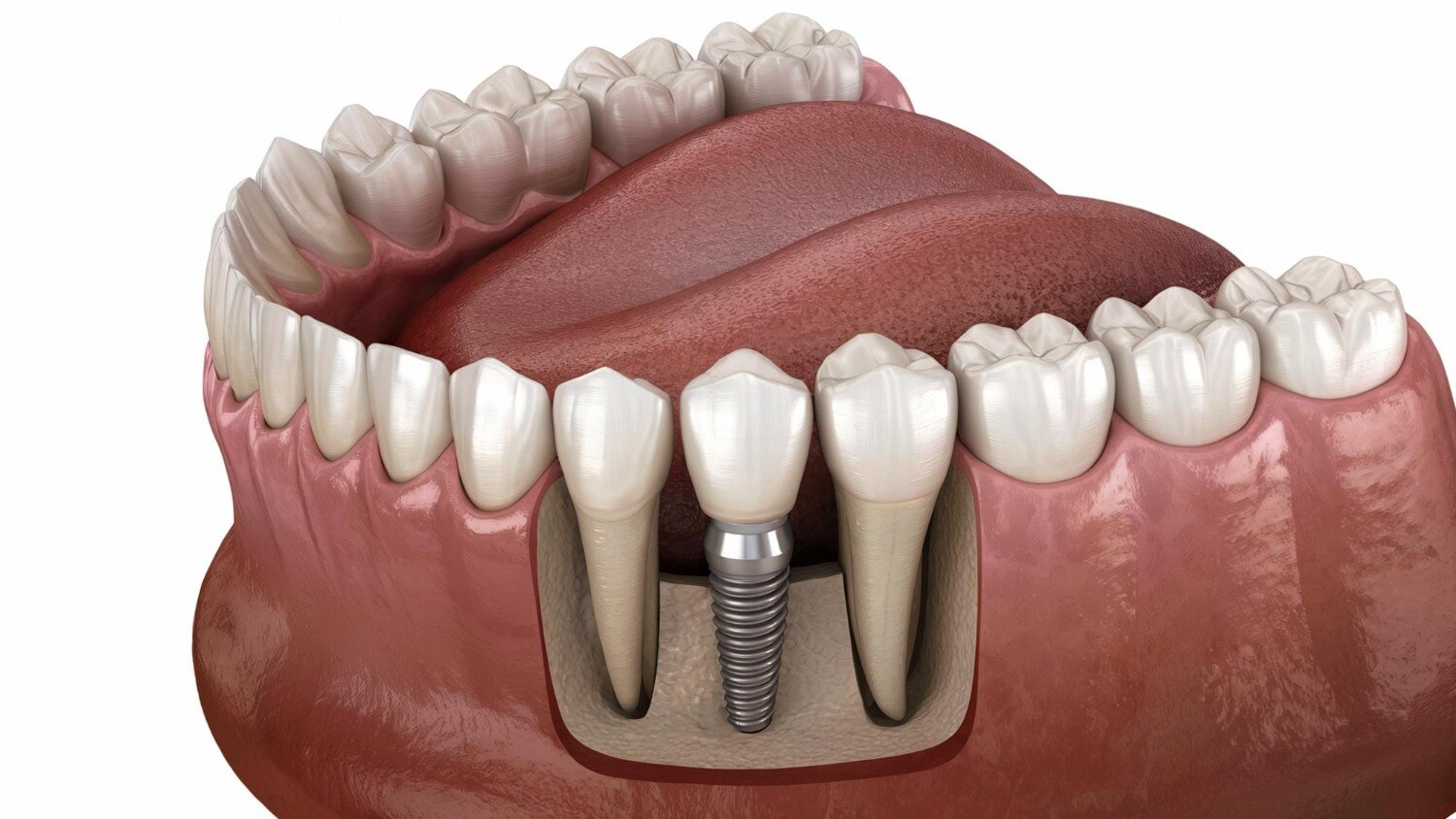
An implant-supported crown replaces the missing tooth’s root as well as its visible crown. The implant fixture sits in the jawbone, an abutment connects it to the crown, and the result stays fixed; surgery, healing time, adequate bone, and careful cleaning are part of the commitment.
| Option | How it works | Main trade-off | Often suits |
|---|---|---|---|
| Implant-supported crown | Implant fixture, abutment, and crown replace one tooth | Requires surgery, healing, and sufficient bone; grafting can add stages | A healthy gap with suitable bone and neighbouring teeth |
| Conventional dental bridge | A false tooth is joined to crowns on adjacent teeth | Healthy neighbouring teeth must be shaped; the bridge needs cleaning underneath | A gap beside teeth that already need crowns |
| Removable partial denture | A removable appliance replaces one or more teeth | Usually avoids surgery but can move, feel less secure, and must be removed for cleaning | Several missing teeth or when lower-cost, non-surgical treatment is preferred |
| Leave a missing tooth untreated | No replacement is placed | Chewing, speech, appearance, tooth position, or bite stability can suffer; bone can shrink | A gap that causes no functional problem after dental assessment |
No option is automatically best. An implant is not a substitute for treating active infection or uncontrolled gum disease, and a bridge is less attractive when adjacent teeth are sound.
If you leave a missing tooth untreated, ask how the opposing tooth and neighbouring teeth are likely to change, then compare maintenance, treatment stages, healing, and long-term affordability.
Understand grafting, healing, and the staged treatment sequence
An implant crown is usually delivered in stages, not at the extraction appointment. The dental implant treatment stages depend on the socket, available bone, gum health, and whether the tooth has already been removed.
1. After extraction, the socket is examined for infection, bone loss, and soft-tissue coverage. An implant may be placed immediately in selected cases, but infection, substantial bone loss, or an unfavourable position usually means allowing the area to heal first.
2. If the ridge is too narrow or shallow for stable placement, the dentist may recommend ridge preservation or bone grafting for dental implants. For an upper back tooth, sinus augmentation may be needed to create height beneath the sinus. Grafting adds surgery and a separate healing period before implant placement.
3. Once the site is ready, the implant is inserted into the jawbone. The gum is closed around it, and the implant remains undisturbed while osseointegration bonds it to the bone. This healing period commonly takes several months, with smoking or tobacco use increasing the risk of impaired healing and complications.
4. After integration is confirmed, the implant is uncovered if necessary, an abutment is fitted, and the dentist records the shape and shade for the definitive crown. The final crown is then attached and checked against the neighbouring and opposing teeth.
Healing does not follow a fixed calendar. Ask which stage applies to you, what imaging would change the plan, and whether a temporary tooth is needed while the site heals.
Use the consultation to test the plan and its long-term demands
Do not agree to treatment until the plan survives specific questions about dental implants, your health, and the years of care after crown placement. A sound plan explains its alternatives, failure points, timeline, and total dental implant risks and costs rather than promising a permanent, maintenance-free tooth.
- What findings on my examination or CBCT would change the plan, and is grafting likely?
- Who will perform the surgical and restorative phases, and who handles complications?
- What is included in the fee: imaging, grafting, temporary teeth, abutment, crown, reviews, and repairs?
- What implant maintenance will I need, how often, and what will those visits cost?
- How would you identify and treat peri-implantitis, and what happens if the implant fails or needs removal?
Judge the plan against your ability to follow it. Active periodontal disease, untreated decay, poor plaque control, smoking or tobacco use, uncontrolled diabetes, certain medications, and missed follow-up appointments can make immediate treatment unsuitable. Bleeding around an implant is not normal; it needs assessment before supporting bone is lost.
DENTessa Dental Clinic Pimple Saudagar,PCMC can be asked to record the proposed sequence, alternatives, healing intervals, and every included or excluded charge so you can compare the plan with a bridge, denture, or delaying replacement. If the answers are vague, obtain a second opinion before consenting.
Related service
Dental Implant Clinic in Pimple Saudagar Dental Implant Clinic in Pimple Saudagar,PCMC DENTessa Dental Clinic is the Best Dental Implant Clinic in Pimple Saudagar, Rahatani, Pimple Nilakh, Kalewadi and Pimpri Chinchwad. View service → |
Frequently asked questions
When should you consult a dental implant clinic after losing a tooth?
Arrange an assessment soon after extraction or unexpected tooth loss, especially if the gap affects chewing, speech, appearance, or your bite. Treat urgent symptoms first.
What does the first dental implant consultation need to establish?
The assessment needs to evaluate the missing tooth, bone volume, gum health, neighbouring teeth, bite, medical history, and whether an implant suits your needs.
How do implants compare with bridges and dentures?
An implant replaces the tooth root, while a bridge uses neighbouring teeth for support and a denture is removable. Leaving the gap avoids treatment but can affect chewing, speech, tooth position, and appearance.
What happens if bone grafting is needed for a dental implant?
Grafting adds bone where the jaw lacks sufficient volume. Treatment then follows stages that can include healing, implant placement, further healing, and attachment of the replacement tooth.
What should you ask during an implant consultation?
Ask about the proposed sequence, alternatives, healing periods, grafting, maintenance, risks, expected longevity, and the effort required to keep the implant and surrounding gums healthy.