

Tooth pain that lingers, starts without warning, wakes you at night, or changes when you bite deserves more than temporary relief. By sorting symptoms by urgency and understanding what a dentist tests, you can decide whether to seek emergency care, book an appointment within a few days, or monitor a brief sensitivity safely.
Key takeaways
- Book an assessment when pain persists, returns, or disrupts eating or sleep.
- Seek emergency care for facial swelling, fever, or trouble breathing or swallowing.
- Lingering heat or cold pain and pain on biting can signal inflamed pulp.
- Do not place aspirin on the tooth; use safe pain relief while awaiting care.
Which tooth-pain patterns need a prompt dental assessment?
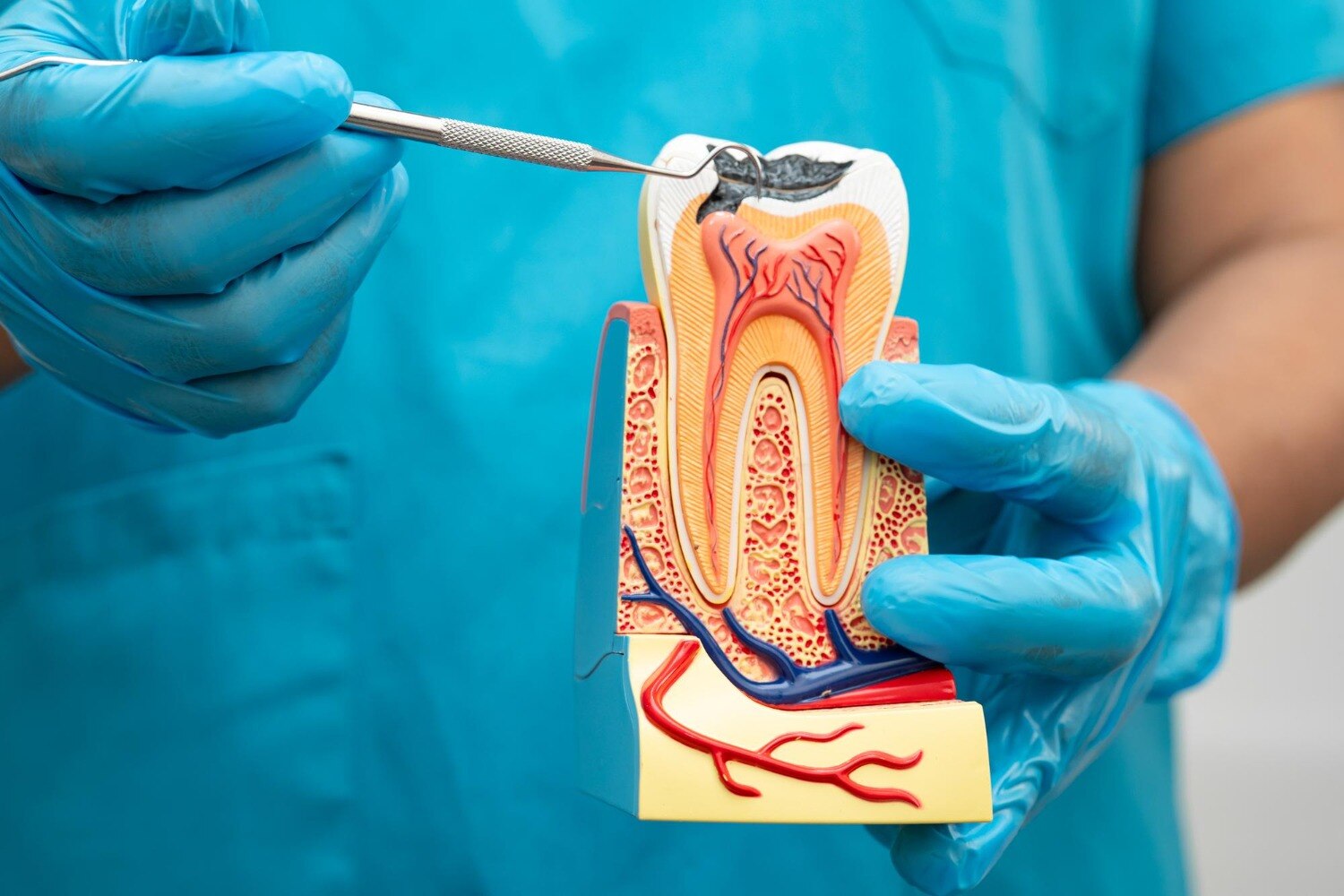
Arrange a dental appointment within a few days if tooth pain persists, returns, or changes how you eat or sleep, even when it is not severe. Lingering hot or cold sensitivity, pain on biting, spontaneous throbbing, and night pain can indicate inflamed pulp.
They do not prove that you need a root canal; diagnosis requires an examination, pulp testing, bite and gum checks, and dental radiographs.
Also seek prompt assessment after:
- A recent blow, fall, or sports injury to the tooth, even without pain. Damage can later cause pulp death, discoloration, or root changes.
- A gum pimple, bad taste, or new darkening of the tooth.
- New swelling near the tooth. Rapidly increasing swelling, fever, trouble swallowing or breathing, or difficulty opening your mouth requires same-day urgent care.
| Pain pattern | What it can indicate | What to do |
|---|---|---|
| Brief cold or sweet sensitivity that stops immediately | Exposed dentin, gum recession, decay, or a filling problem | Arrange an examination if it keeps recurring |
| Lingering hot or cold sensitivity | More substantial pulp inflammation | Book a prompt assessment |
| Pain on biting | A crack, loose filling, or inflammation around the root | Avoid chewing on that side and arrange an appointment |
| Spontaneous throbbing or night pain | Advanced pulp inflammation | Arrange prompt dental care; painkillers do not repair the pulp |
Which warning signs make tooth pain an emergency?
Seek same-day urgent care when tooth pain comes with infection signs; go to emergency medical care immediately if swelling threatens your airway.
| Situation | What it can indicate | What to do |
|---|---|---|
| Facial swelling, gum swelling, fever, feeling unwell, swollen neck glands, or a bad taste from drainage | A dental abscess or spreading infection | Contact a dentist for same-day assessment; do not wait for a routine root canal appointment |
| Neck swelling, swelling spreading toward the eye or neck, or rapidly worsening pain | Infection extending beyond the tooth | Seek emergency medical care immediately |
| Difficulty swallowing or breathing, trouble speaking, or inability to open your mouth normally | Airway risk or a deep facial-space infection | Go to an emergency department now |
| Severe pain with no swelling | Inflamed pulp, a cracked tooth, a loose restoration, or another dental problem | Arrange urgent dental assessment, but use emergency care if the warning signs above appear |
Do not press, puncture, or drain a swelling yourself. Do not place aspirin on the gum; it can burn the tissue. A same-day dentist can examine the tooth, test the pulp, assess drainage, and decide whether you need root-canal treatment, drainage, extraction, or another form of care.
Antibiotics alone do not remove infected pulp or repair a cracked tooth.
How can you tell root-canal-type pain from other dental problems?
Pain on biting or sensitivity to cold does not prove that the pulp needs treatment. Compare the pattern with these alternatives:
| Problem | Clues that point toward it | What usually distinguishes it |
|---|---|---|
| Cracked tooth | Sharp pain when biting or releasing pressure; pain may be hard to localise | A crack can also inflame the pulp and make the tooth non-restorable, so arrange an examination |
| Loose filling | Sudden sensitivity or a rough, mobile filling; food catches around it | Pain often began after the filling loosened and may improve when the restoration is repaired |
| Gum infection | Tender, swollen gum; bleeding; pus, bad taste, or a gum pimple | The tooth may respond normally to cold while the gum or pocket remains painful |
| Exposed dentin | Brief, sharp pain from cold, sweets, air, or brushing that stops immediately | Recession, wear, decay, or a defective filling can expose the dentin |
| Sinus pain | Dull pressure in several upper back teeth with blocked nose or facial pressure | Bending forward can worsen it, and individual teeth are less clearly responsible |
| Wisdom-tooth inflammation | Pain behind the last molar, swollen gum flap, bad taste, or difficulty opening the mouth | Food trapped around a partly erupted wisdom tooth commonly triggers it |
| Inflamed pulp | Spontaneous or throbbing pain; heat or cold causes pain that lingers after removal, often worse at night or when lying down | The dentist confirms the pattern with pulp tests, tapping, gum probing, and radiographs |
Book an assessment when pain persists, recurs, or disrupts eating or sleep. A single symptom cannot establish that root-canal treatment is needed.
What happens during a root canal evaluation, and how is treatment chosen?
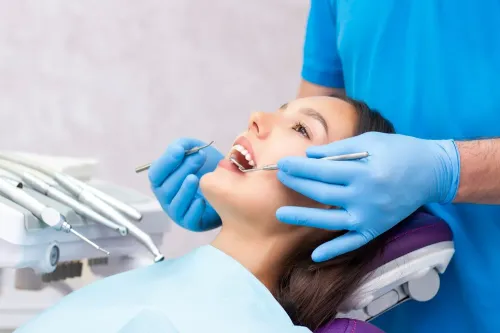
Pain intensity alone cannot decide the treatment. A dentist records triggers, duration, spontaneous or night pain, previous fillings and injury, then examines the tooth and neighbouring teeth.
Cold or heat testing checks whether the pulp reacts normally; tapping and biting tests look for inflammation around the root, but a crack or loose filling can produce the same response. Gum probing checks for a deep isolated pocket or periodontal support.
Dental X-rays show decay, bone changes and root anatomy, although early pulp disease can look normal.
The findings usually place the tooth in one of these categories:
- Filling: decay, exposed dentin or a defective restoration explains brief sensitivity that stops when the stimulus is removed, and the pulp remains capable of recovery.
- Root canal treatment: pain lingers after cold or heat, starts without stimulation, wakes you at night, or combines with pulp-test and root-area findings indicating irreversible inflammation or dead pulp.
- Crown or onlay: the tooth needs cuspal coverage because decay, a large filling or root-canal access has removed substantial structure, especially in a premolar or molar. Root canal treatment does not replace this protective restoration.
- Extraction: a crack extends below the gum, too little sound tooth remains, or periodontal support cannot hold a restoration. Saving a tooth is not sensible if it cannot be sealed or restored.
- Observation: tests are inconclusive, symptoms are mild and brief, and no destructive cause appears; review catches change without treating a healthy pulp.
At DENTessa Dental Clinic Pimple Saudagar,PCMC, ask which finding supports the recommendation and what alternative remains if the tooth proves non-restorable.
Related services
Root Canal Treatment Clinic in Pimple Saudagar Root Canal Treatment Clinic in Pimple Saudagar,PCMC DENTessa Dental Clinic is the Best Root Canal Treatment Clinic in Pimple Saudagar, Rahatani, Pimple Nilakh, Kalewadi and Pimpri Chinchwad. View service → |
Laser Root Canal Clinic in Pimple Saudagar Laser Root Canal Clinic in Pimple Saudagar, Pimple Gurav, PCMC DENTessa Dental Clinic is the Best Laser Root Canal Clinic in Pimple Saudagar, Rahatani, Pimple Nilakh, Kalewadi and Pimpri Chinchwad. View service → |
What should you do while waiting for the appointment?
Avoid chewing on the painful tooth, especially hard or sticky foods, and keep the area clean with gentle brushing. Do not place aspirin on the gum: aspirin on the gum can cause a chemical burn.
If a filling has fallen out, a temporary filling material from a pharmacy can protect the opening until assessment; follow its instructions and do not use it to seal swelling or drainage.
- Use an over-the-counter pain reliever only if it is safe for you, and follow the product label or a clinician’s advice. Check pain medicine safety if you have ulcers, kidney disease, liver disease, are pregnant, take blood thinners, or have an allergy. Do not place tablets directly against the tooth or gum.
- Do not start leftover antibiotics. They do not remove inflamed pulp, and a dentist must decide whether infection has spread or systemic treatment is needed.
- Contact the clinic urgently for swelling, fever, feeling unwell, swollen neck glands, drainage, or a bad taste. Seek emergency medical care for difficulty breathing, swallowing, speaking, or opening your mouth, or swelling spreading toward the eye or neck.
- Report any dental trauma, even without pain. A damaged tooth can later darken or lose pulp vitality and may need monitoring.
If severe pain suddenly stops, do not assume the tooth has healed. The pulp may have died; arrange assessment promptly, particularly if swelling or a darkening tooth follows.
Frequently asked questions
Which tooth-pain patterns need a prompt dental assessment?
Arrange an appointment within a few days when pain persists, returns, or affects eating or sleep. Lingering hot or cold sensitivity, pain on biting, spontaneous throbbing, and night pain need assessment.
Which warning signs make tooth pain an emergency?
Seek urgent care for facial or jaw swelling, fever, spreading redness, difficulty opening your mouth, or trouble breathing or swallowing.
How can you tell root-canal-type pain from other dental problems?
Inflamed pulp often causes lingering heat or cold sensitivity, spontaneous throbbing, night pain, or pain that worsens on biting. A dental examination and X-ray are needed to distinguish it from decay, a crack, gum disease, or referred pain.
What happens during a root canal evaluation, and how is treatment chosen?
The dentist reviews your symptoms, examines the tooth, tests its response to cold or tapping, checks the surrounding tissues, and takes an X-ray when needed. Treatment depends on pulp damage, infection, tooth structure, and whether the tooth can be restored.
What should you do while waiting for the appointment?
Chew on the opposite side, keep the area clean, avoid very hot or cold foods, and take pain medicine only as directed on its label or by your clinician. Do not place aspirin on the tooth.